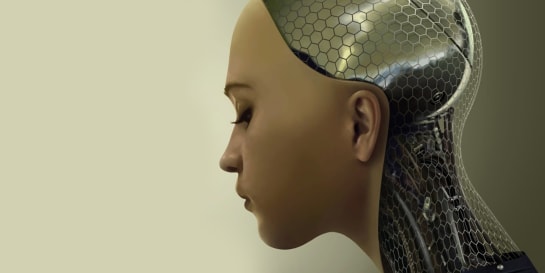
My theory about Apple’s TV show “Silo:” What if Silo 1 isn’t protecting the other forty-nine silos—but using them to test which version of humanity deserves to inherit Earth?
Disclaimer 
An entirely TV-only theory through episode S03E09, “Farewell,” of Apple’s TV show “Silo.” I haven’t read the books and I’m deliberately avoiding book knowledge, leaks, or anything from the finale. This isn’t a scientific theory—it’s what happens when a nerd turns nine episodes over in his head until they click into a shape.
The obvious reading is simple: Silo 1 is an ark. It’s keeping fifty populations alive until humanity can return to the surface.
I want to add one step. What if Silo 1 isn’t just trying to make sure humanity survives the catastrophe—what if it’s using the fifty silos to learn how humanity can survive itself?
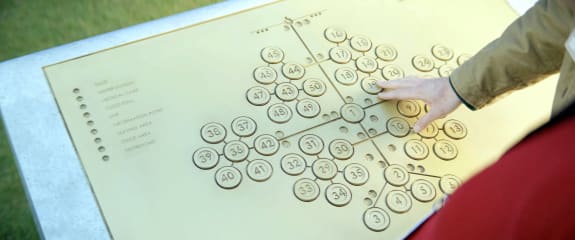
In that case, Silo 1 isn’t hunting for the “best silo” to repopulate Earth. It’s hunting for a reproducible setup for human society—one that can grow and develop without eventually destroying itself.
The fifty silos are test environments. Population mix, rules, leadership, permitted knowledge, even value hierarchies are variables. Rebellions are failed runs. Vitamin D+ is a soft reset. The Safeguard is a kill switch for runs that go too far off course.
The eventual winner wouldn’t be Silo 18, or Silo 17, or any specific population. It would be whichever configuration reliably produces a society that doesn’t destroy itself. That configuration gets promoted to production—or, in this case, repopulation.
What the Show Has Actually Established by 3x09 
Before I speculate further, here’s what’s onscreen.
Stensen built fifty silos. In 3x08, Anna first calls them storage for “seeds”; Stensen adds art, literature, science. Thurman says the quiet part out loud: the other seeds are people, meant to repopulate Earth after the end of the world. Stensen believes that ending can’t be stopped, only survived.
His greatest fear is nanotechnology—a weapon that turns people into “gray goo.” Charlotte’s failed Iran mission convinces him an enemy already has something close. Nuclear war, climate collapse, pandemics, and AI round out his list, but nano is the threat his entire worldview and fortune are built around.
The silos aren’t improvised shelters; they’re a coordinated system. By 3x09, some people have lived inside for almost a year. Millions applied to visit or participate. Every visitor gets a badge assigning them to a specific silo, and Stensen ensures at least two people from every country on Earth are placed. “At least two” is a minimum—it says nothing about equal distribution between silos.
To be honest, AI wrote it. We just did some editing. And you know, hopefully, we’ll never have to find out if we did a good job.
Viktor
The Pact already exists before Day One—Charlotte’s book of rules for living underground for 500 years without killing each other. Daniel credits Anna and Victor; Victor corrects him: AI wrote it, they only edited it. Funnier now, uglier in hindsight—“AI wrote it” means nobody has to feel like the author. Anna and Victor edited, Stensen funded, Thurman authorized, Silo 1 enforced. Responsibility gets spread thin enough that everyone can claim they only touched one part of the machine.
Five hundred years is oddly specific—too long for an emergency shelter, too neat to be a plain reading of radioactive decay. It could be an environmental estimate. It could also be an experimental horizon or an engineering runway. Possibly both.
I think they’re in 17. It’s the best one.
Viktor
Victor tells the tour that Peter Gabriel’s family is in Silo 17 “because it’s the best one.” Daniel asks if they’re not all the same. Victor laughs it off as a silo joke. On the literal reading, nothing’s hidden—the structures are identical. The line only gets interesting if “the silos” have a dimension Victor isn’t addressing: identical shells, different populations, rules, or experimental parameters. Maybe it’s just a joke. Maybe the show is giving it a second meaning that lands later.
Meanwhile, Peter Gabriel is rehearsing “Here Comes the Flood.” Subtlety has already taken shelter.
Then the bomb goes off during the grand opening.
By that point, Helen has been directed to Silo 18 while Henry steers Daniel toward Silo 1—at first with ordinary reasons (the senator wants him, Charlotte’s supposedly there, Helen can join later). When Daniel walks uphill for a phone signal to find his wife, Henry gets pushier: physically redirecting him, refusing to help him reach Silo 18, insisting he come back now. Daniel’s look shifts from irritation to alarm.
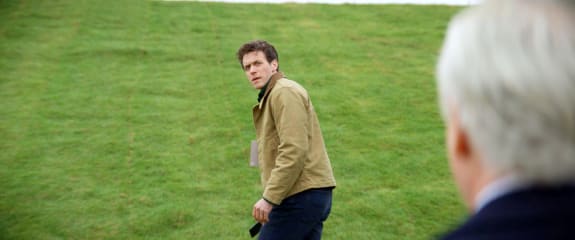
Crucially, this happens before the public warning. Henry has no emergency yet to react to—he behaves like someone with an assignment and a deadline: get Daniel across Silo 1’s threshold, whatever it takes.
Daniel has also gotten a text from Charlotte he doesn’t believe she wrote. Charlotte’s nowhere to be found. The night before, Anna warned they might be called in early; Charlotte replied she thought everything was already settled. At the silos, Anna apologizes for missing breakfast—“they wanted us here early”—and last saw Charlotte finishing a mocha in the cafeteria.
Moments later, Daniel and Helen finally spot each other across the complex. The explosion follows almost immediately. Henry tries to drag Daniel into Silo 1 while the public system orders everyone into the nearest silo. That looks less like an improvised evacuation and more like a loading operation hitting its deadline.
The present-day story adds machinery that goes well beyond sheltering:
- Silo 1 can observe the other silos and trigger their Safeguards.
- An airborne system watches the surface and shoots at Lukas and Kennedy.
- The silos are prevented from communicating with each other.
- The Algorithm measures outcomes, compares administrations, and recommends interventions.
- Vitamin D+ can erase or suppress memory across a population via the water supply.
- Relics and historical records are forbidden.
- Silo 17 died after its rebellion, with its Safeguard pipe physically blocked from inside.
- Bernard concludes the voice behind the wall is a person in Silo 1—someone deciding everyone else’s fate.
One more detail bothers me. The official explanation for earlier deaths is faulty heat tape—tiny gaps around the gloves letting poison in. Juliette survives because her suit was sealed with the good tape.
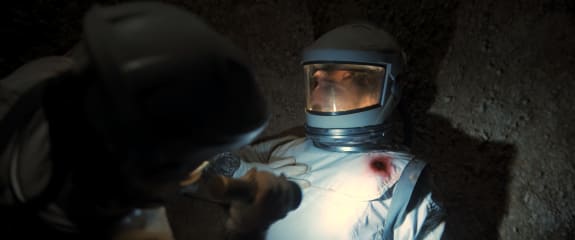
Lukas is shot outside, and the bullet tears a hole far bigger than any glove gap. He argues that if the poison were real, it would have killed him through that hole—it doesn’t. He reaches Silo 17 alive. That doesn’t prove the whole planet is safe; danger could vary by location or mechanism. But it breaks the simple story that uniformly lethal air seeps through pinhole gaps and kills in minutes. A local or actively controlled killing mechanism now fits the evidence better than a uniformly toxic environment does.
What’s Possible Without Contradicting Any of That 
Nothing onscreen says the fifty populations started with equal inputs—the “at least two per country” minimum practically invites the opposite. Different silos could have received different mixes of culture, profession, temperament, class, health, ideology, or family structure.
Nothing says the Pact stayed identical everywhere for centuries, either. Calling it the Pact proves little—from inside one silo at one moment, there’s only ever one operative Pact, the way we say “the software” while running different versions. The Pact is a set of rules, and rules are parameters. A shared original Pact could still branch after rebellions or resets, with Silo 1 tweaking select rules and watching what follows. We have no proof this happens—but no proof it didn’t, either. Even without a literal rewrite, each post-rebellion settlement changes the operative constitution: who holds power, which rules stick, what technology survives, what people believe.
Vitamin D+ wouldn’t be the whole reset—it would open the door for one. If most people no longer remember reliably, a team could enter through the main airlock, repair damage, restack supplies, remove evidence, install a revised Pact, alter leadership, and leave behind a new official story. “Rebels destroyed the old records” would be a remarkably convenient cover for exactly that.
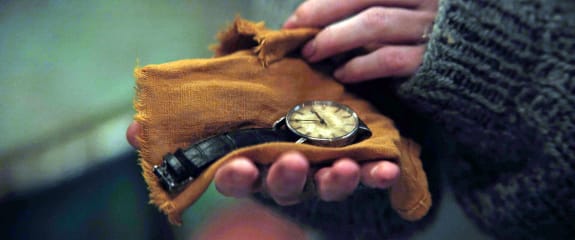
This reset would never be a true square one—resource depletion, genetics, structural damage, habits, and buried relics would all carry over. But memory suppression plus physical intervention may be the closest thing to a clean reset anyone can manufacture. And the silos wouldn’t need to reset in sync—asynchronous resets would actually generate more data: different populations, different rules, different rebellion intervals, some serving as controls, others taking a changed parameter after failure.
For any of this to work, Silo 1 needs surface access and people who can move between silos. If the surface threat is local and controllable, reset teams could move freely while residents stay convinced that opening the door means death.
The 500-year figure might describe the lab’s shelf life rather than an environmental deadline. Silo 18 is already learning some supplies can’t be manufactured—light bulbs become existential when they’re needed to grow food. Multiply that by seals, medicines, sensors, and whatever keeps Silo 1’s surveillance running. The whole system may simply be engineered for an acceptable probability of lasting that long. Indefinite experimentation could be a luxury even Silo 1 doesn’t have.
What I Think This Points At 
Suppose Stensen and Thurman reached a conclusion darker than the one they admit over dinner.
Human civilization has approached a Great Filter. Advanced societies eventually build technologies capable of ending themselves. Iran’s nanoweapon isn’t the one invention that can still be stopped—it’s evidence the outcome is structurally inevitable. If Iran doesn’t build it, someone else will; if nano fails, nuclear weapons, engineered pathogens, or AI eventually will.
A bunker can preserve people through one catastrophe. It can’t stop their descendants from rebuilding the same civilization and arriving at the same filter.
So the actual project isn’t just saving a sample of humanity. It’s finding the social conditions under which humanity can become capable enough to survive without becoming capable of destroying itself.
To avoid the Great Filter, humanity filters itself.
That gives the fifty silos a purpose beyond redundancy: parallel test groups with different starting conditions, a shared institutional baseline, and an observer. Rebellions reveal failure modes. Vitamin D+ enables another iteration. The Safeguard ends a run that threatens the wider experiment. Relic suppression stops one iteration’s history from contaminating the next.
Criteria could include stability, trust, treatment of dissent, technological development, and whether advanced knowledge keeps turning into civilization-ending weapons. The exact list matters less than the objective: find parameters that work in one population, then reproduce them elsewhere. A configuration that succeeds once might be luck. One that survives multiple resets across different populations is closer to validated.
That’s the winner—not the first silo to reach the finish line, not its mayor, not the ten thousand people who lived and died producing the data, but the arrangement itself: hierarchy of values, distribution of power, permitted knowledge, reproductive policy, conflict resolution, and self-correction. At the end of the experimental period, Silo 1 could push that setup into the remaining viable populations, raise one final generation under it, and open the doors. The winning society might never know it won. Its reward is being copied.
This also makes the catastrophe itself look deliberate. Uncontrolled survivors outside would ruin the entire premise—five centuries later, the carefully prepared population would collide immediately with an uncontrolled branch of humanity carrying the old rivalries and technologies. Day One needed more than shelters. It needed the old world gone, and the shelters full before that happened.
The opening ceremony delivers both: selected people worldwide standing beside assigned silos, founders and essential personnel concentrated around Silo 1, Henry maneuvering Daniel across its threshold before anyone knows why. Then the bomb goes off.
Thurman has the political and military power to authorize Day One. Stensen supplies the money and the worldview. Maybe they got precise warning and exploited it. My less charitable read: they triggered the catastrophe themselves once every piece was in place. I don’t think Charlotte flying the delivery aircraft is the likeliest explanation, but her absence makes it possible enough to be disturbing—a military pilot, already used as a disposable probe, memory manipulated, missing after an early summons, vanishing behind a text she didn’t write. Not proof. Exactly the kind of thread a finale loves to pull.
None of this needs to feel evil from the founders’ side. Their value hierarchy simply ranks abstract future humanity above everyone currently alive. If extinction is otherwise inevitable, killing billions after loading a controlled ark becomes a horrendous form of prevention. “Benign” describes their terminal motive, not their means. A little like Thanos, except the snap is followed by five centuries of A/B testing.
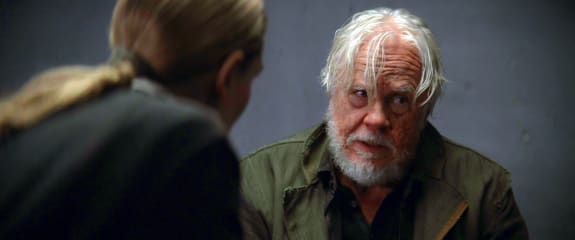
And Silo 1 may not be the final layer. Bernard thinks he’s found a person behind the machine—fine, but who assigned that person? Who sets the criteria? Who decides a run has failed? What stops the evaluators from protecting their own role? The person in Silo 1 may be another prisoner performing the role of sovereign.
Where This Theory Is Most Likely to Crack 
The biggest crack is scale. A silo is a controlled environment—population, reproduction, knowledge, movement, and resources can all be constrained. Earth is an open-world game. A society that avoids destructive technology while advanced science and horizontal communication are banned hasn’t proven it’ll stay safe once it inherits an entire planet. The experiment may discover how to prevent civilization-ending weapons by preventing civilization itself.
Maybe the founders are testing a bootloader, not a finished society—values and correction mechanisms robust enough to start planetary life, then adapt. Or maybe the experiment is simply flawed, because its architects mistook a controlled model for reality. Powerful, intelligent people do that constantly.
The resets are dirty, too. Memory can be suppressed, but history survives in infrastructure, genetics, resource use, relationships, and overlooked relics. Square one isn’t transferable between silos or reproducible between rebellions—if Silo 1 claims to know which variable caused an outcome, it may be fooling itself.
We also don’t actually know the variables differ deliberately. Fifty silos could simply be redundancy. The Pact could be identical everywhere. Vitamin D+ could restore the same arrangement after disorder rather than launch a new branch. An experiment needs varied inputs, measurement, and a decision rule—we have strong hints of measurement and termination, but not yet proof of designed variation.
Then there’s Goodhart’s law. Reward low rebellion, and you might select for terror or learned helplessness. Reward the absence of civilization-ending weapons, and you might select for ignorance. Reward social harmony, and you might erase everyone capable of reporting disharmony. Nobody inside can challenge the interpretation, because nobody knows the experiment exists.
And finally: what result would make Silo 1 admit the premise failed? If every rebellion justifies another reset, every calm tyranny looks promising, and every failure earns another century, the experiment can’t falsify itself. The 500-year horizon might be the stopping rule—or just an engineering deadline, choosing something before the lab dies. From inside, the conditioning feels indefinite because nobody knows the horizon exists. From Silo 1’s perspective, the clock may still be running exactly as designed.
But the people running Silo 1 have built their identity and authority around completing the mission. Could they accept “there is no portable setup—open the doors”? Or would they keep searching, because the right population is always one reset away? That’s where the experiment folds back onto its operators: the final variable may be whether the people with the power to end it can recognize a valid negative result.
So, after 3x09: the obvious mission is preserving fifty candidate civilizations until Earth can be repopulated. I think Silo 1 may be doing something more ambitious and more horrifying—using those populations to search for a reproducible configuration capable of manufacturing a civilization that won’t cause its own extinction.
The winner doesn’t get to repopulate Earth. The winner is what gets installed before anybody does: the setup Silo 1 believes will let humanity survive itself.
Episode 10 is called “Troy.” I fully expect it to blow this whole thing to pieces. Fair enough—that’s half the fun.


Jan 22, 2025 · 8min read
The Vanishing Point—Why AGI Might Never Exist
What if AGI (Artificial General Intelligence) is impossible not because we can’t achieve it, but because it can’t exist as a stable state? A dialogue about processing speed, dimensional transcendence, and why we might be playing Russian roulette with our civilization’s future. Continue…

Apr 4, 2023 · 5min read
The True Challenge of the AI Alignment Problem
AI is a big topic these days. One reason for this is the fear of AIs acting against human values, potentially causing severe consequences. However, there’s an even bigger challenge than aligning AIs: Let’s look in the mirror. Continue…
Mar 8, 2020 · 4min read
Are We Innovating Our Stagnation?
Today’s global challenges require humankind to learn and adapt. Artificial Intelligence will help drive these changes, right?—Maybe not. Continue…